
· by Michael Blair, Nashville's Gutters
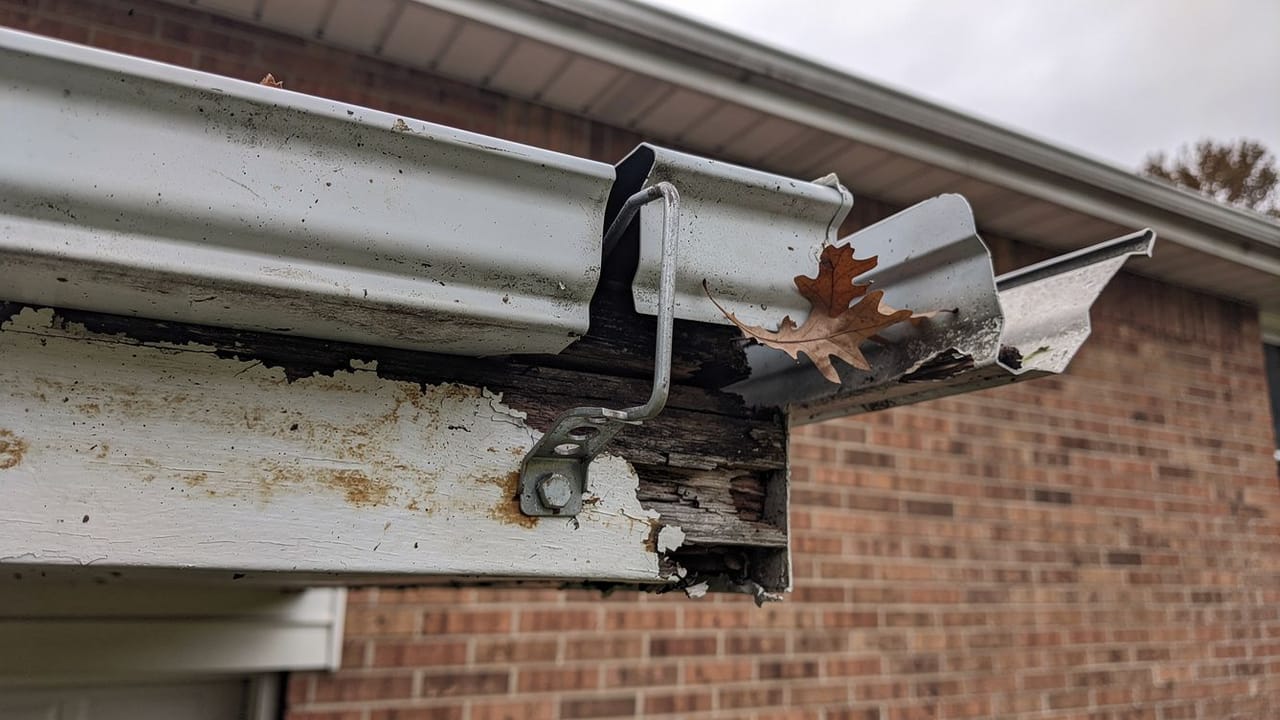
The fascia is the board along the edge of the roof that the gutter is fastened to, and it spends its life behind a trough of water where nobody looks at it. When it goes soft, the gutter loses its grip. That is why we check the fascia before we price a gutter: a new gutter screwed to the same soft board has nothing to hold it, and the board is never easier to reach than while the old gutter is coming down. When the fascia turns out to be the problem, our fascia and soffit repair comes first and the gutter second.
Why fascia rots
We treat a fascia board the way the EPA treats anything in a house that gets wet. Its brief guide to mold, moisture and your home says that outdoors, molds break down dead organic matter such as fallen leaves and dead trees, that molds gradually destroy the things they grow on, and that in most cases mold will not take hold on damp material that is dried out inside 24 to 48 hours. The back of a fascia board sits pressed against a gutter, out of the sun and the wind, so after a storm it may not get that chance to dry.
So when we find soft wood, we go looking for where the water came from, and we check three places. The first is the roof edge: with no drip edge flashing under the shingles, we watch whether water leaving the roof runs back along the underside instead of dropping into the gutter. The second is the gutter itself, clogged or not, and whether it has been spilling over its back edge onto the board; our post on gutters that overflow even when clean goes into why a clear gutter can still do that. The third is every seam, corner and end cap, where we look for drip marks and dark wood below the joint.
How do you find rotten fascia behind a gutter?
From the ground, we look for a gutter that has dropped or pulled away from the roof edge, for peeling paint or dark staining on the underside of the fascia, and for soffit panels that sag or carry water marks. Any homeowner can spot those from the yard. What they cannot tell you is how far the soft wood runs, and that takes a ladder: we press a screwdriver into the bottom edge of the fascia behind the gutter every few feet, more closely near downspouts, at corners and below any roof valley. We judge the board by its back and bottom, because the painted face is the only side anyone sees.
If the screwdriver sinks in, the wood crumbles, or a hanger spins without tightening, that length of board is replaced before anything is hung from it. We check the sub-fascia and the rafter tails as well. Rot that has reached the framing is a bigger repair than a trim board, and it can change the paperwork: Metro Codes’ residential building permits page requires a permit for repairs that go beyond normal maintenance, including removing or altering load bearing timbers. That page covers Davidson County; for a house in Franklin, Murfreesboro or any of the other towns we serve, we ask the local codes office.
- Probe the bottom edge behind the gutter, closely at corners and downspouts
- Look for soffit staining and sagging beneath
- Check that existing hangers bite into solid wood
- Look under the roof edge for drip edge flashing
What order should fascia and gutter work go in?
Gutters come off first. Rotten fascia is cut out and replaced with new board that we prime on every side, cut ends included, and any rafter tail damage is repaired while it is open to view. Where the roof edge has no drip edge, we talk with the homeowner about adding it before the gutter goes back up. Then the old gutters are rehung, or new ones go up in their place.
Doing it in that order adds labor compared with screwing a new gutter to the board that is already there, and that can account for some of the gap between two quotes for the same house. A quote that never mentions the fascia deserves a question before you sign it. If you would like us to probe yours and price the work in the right order, ask us for a free estimate.
Keeping the new board dry
Drip edge is the first detail we look for, and we would rather add it than hang a new gutter under a bare roof edge. If the roof itself is due for replacement, the same Metro permits page lists installing roofing among the work that needs a permit, and the house code a new roof is held to has changed: Metro’s list of adopted codes now names the 2024 edition of the International Residential Code, amended locally, and the July 2025 release on its adoption puts it in force for anything applied for after July 16 of that year. Ask the roofer how the edge will be flashed under that edition. Our hangers go through the back of the gutter into solid wood, and into the rafter tails wherever we can reach them, rather than relying on the trim board alone. We seal the end caps and miters so water is not left to soak into the ends of the board, and our post on gutters leaking at the seams covers resealing the joints on an older run.
After that it comes down to upkeep. The same EPA guide lists cleaning and repairing roof gutters regularly among its tips for preventing moisture and mold, and a gutter that stays clear has less reason to spill onto the board behind it; if you would rather not do that from a ladder, it is our gutter cleaning service. We would also rather see fascia repainted when the paint starts to lift than after the wood is bare. Wrapping fascia in aluminum coil stock covers the wood completely, which is exactly why we only wrap a board we have probed and found sound, and we flash the top edge so water cannot run in behind the cover.
Sources
- U.S. EPA, A Brief Guide to Mold, Moisture and Your Home — Molds break down dead organic matter and gradually destroy what they grow on; materials dried within 24-48 hours usually do not grow mold; clean and repair roof gutters regularly
- Metro Nashville Codes, Residential Building Permits — A permit is required for repairs beyond normal maintenance, including removing or altering load bearing timbers
- Metro Nashville Codes, Adopted Codes List — 2024 International Residential Code adopted with local amendments
- Metro Nashville Codes, Metro Adopts 2024 International Building Codes (July 23, 2025) — BL2025-898 adopts the 2024 ICC codes for plans and applications submitted after July 16, 2025
FAQ
Fascia Rot Behind the Gutter, and Fixing It First — questions
Can new gutters be installed over rotten fascia?
They can be hung, but we will not do it. A hanger screw needs sound wood to bite into, and soft fascia gives it nothing to hold. We replace the soft sections before the gutter goes up, since the board is easy to reach with the old gutter off and awkward to reach once a new one is in the way.
How do I know if my fascia is rotten without a ladder?
From the yard, look for a gutter that has dropped or pulled away from the roof edge, peeling paint or dark stains on the underside of the fascia, and soffit panels that sag or show water marks. Those tell you something is wrong, but not how far the soft wood runs. That takes probing the board behind the gutter from a ladder.
What is drip edge and do I need it?
Drip edge is a metal flashing that runs along the edge of the roof under the shingles. We want it there so water leaving the shingles drops into the gutter instead of running back onto the fascia, and we look for it on every gutter job. Whether it can be added without disturbing the roof depends on the condition of the shingles along the edge, so we look before we say.
How do you repair rotted fascia?
Cut out the soft length and replace it with new board primed on every side, cut ends included. With the gutter off, check the sub-fascia and rafter tails too, since rot in the framing is a bigger repair that can need a permit. Then add drip edge where it is missing and rehang the gutter.