
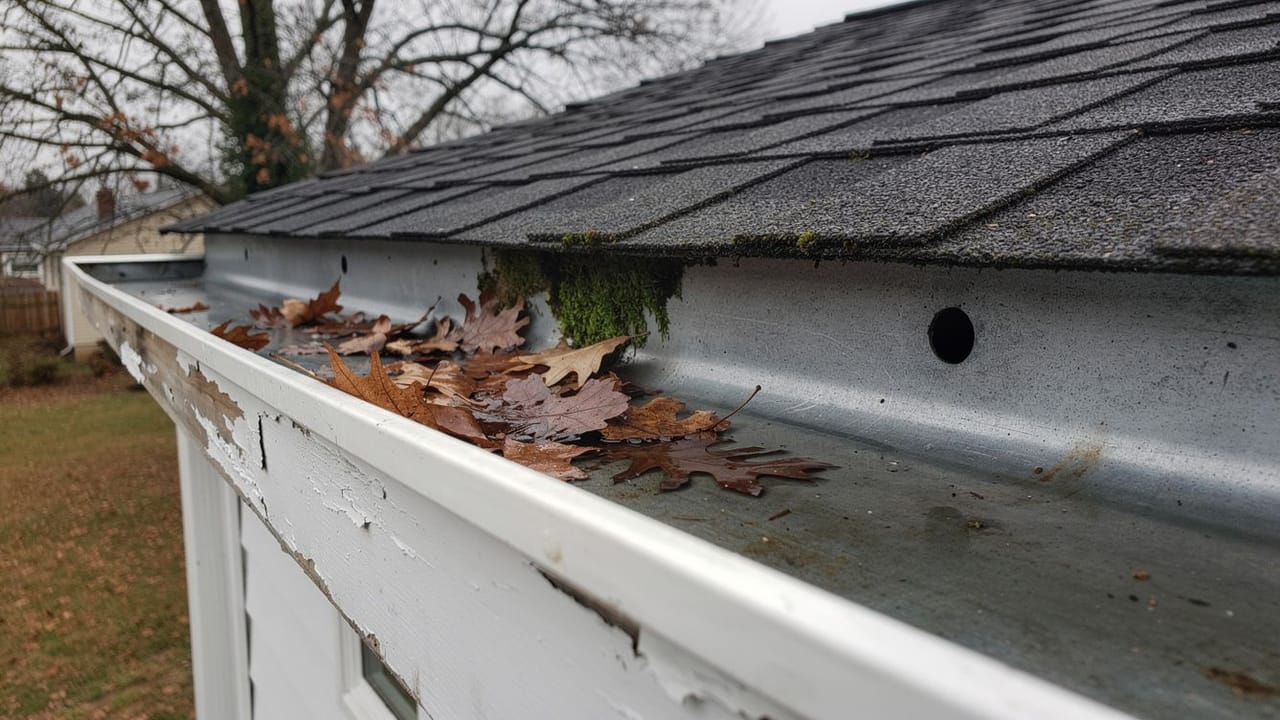
· by Michael Blair, Nashville's Gutters
Some older Nashville houses, including ones in Edgefield, Germantown and Lockeland Springs-East End, the historic districts Metro Planning lists among its zoning overlays, don’t have gutters hanging off the fascia at all. The trough is built into the edge of the roof, lined with sheet metal, and hidden behind the trim so the eave reads as one clean line from the street. These are box gutters, also called built-in gutters, and the National Park Service’s Preservation Brief on roofing for historic buildings says built-in systems can be effective if they are properly maintained. When they aren’t, the same brief warns, the water they collect can leak into the roof structure and the walls around them, which is a place nobody sees from the yard.
What is a box gutter, and how is it built?
The trough is a wooden box set into the eave, with the roof running down into it and the cornice trim wrapped around the outside. It was lined with sheet metal, and the roofing brief names the common historic roofing metals as lead, copper, zinc, tin plate, terne plate and galvanized iron. On a house that has been worked on since, the first thing we check is what the lining is now and what, if anything, has been laid over the old metal. Water runs along the lining to an outlet and leaves by a downspout, which on some buildings runs down inside the wall and on others drops to a downspout outside.
Everything under that lining is wood. On a hung gutter, a failed seam drips outside the house. On a box gutter, the brief points out, the conduit from the built-in gutter to the downspout can leak into the surrounding roof structure or walls, and the Park Service’s brief on maintaining small and medium size historic buildings puts keeping water out of the attic, the exterior walls and the basement at the center of roof maintenance.
Where do box gutters fail?
Old metal linings rust once their coating goes. Tin plating or galvanizing protects iron only as long as the coating stays intact, the roofing brief explains, and once it is worn or damaged the exposed iron will rust, so we look hardest at the places where water and wet leaves sit. Joints are the other weak spot in the metal: the same brief says sheet metal can fail at its joints from its back-and-forth movement with changes in temperature. On a membrane relining, the seams and the turn down into the outlet are where we look first for a leak.
Be wary of asphalt patches. The roofing brief shows a built-in gutter on the Roane County Courthouse in Kingston, Tennessee, where repeated asphalt repairs had cracked and blistered into a surface that holds water, and the maintenance brief says to avoid asphalt compounds on metal gutters because the acidic material can make the metal deteriorate further.
Slope and outlets decide where the water goes. If the slope is too shallow for good runoff, or the outlets are allowed to clog, the roofing brief warns that rainwater pools, and that debris in the gutters and downspouts makes water back up and seep under the roofing. Inside the house, the maintenance brief says watching from the interior is part of finding where a leak is, and the roofing brief suggests checking the underside of the roof from the attic after a storm. Moss deserves attention too, since it holds moisture and causes rot.
- Water stains in the attic or on an upstairs ceiling close to an outside wall
- Peeling paint or soft wood on the cornice or soffit below the trough
- Rust stains or drips at the conductor head or outlet
- Water still standing in the trough well after the rain has stopped
- Plants or moss growing in the gutter line
Reline, restore or convert
If the wooden box underneath is sound, relining it is where we start. For a metal lining, the roofing brief says lead-coated copper, terne-coated steel and aluminum/zinc-coated steel can successfully replace tin, terne plate, zinc or lead, and that copper-coated steel is a less expensive and less durable substitute for sheet copper. Soldering is hot work on top of old dry wood, and the brief also warns it can be a fire hazard, from the open flame or from the wood underneath smoldering unnoticed. A single-ply membrane is the other choice; ask how its seams and outlet are detailed, and plan to inspect it often. Where the box itself has rotted, our gutter repair crews cut out the rotten wood and rebuild it first, the same carpentry as our fascia and soffit work, and correct the slope toward the outlet while it is open.
The other route is to close the box, roof over it, and hang a half-round or K-style gutter on the fascia instead. The box then holds no water against the wall, but the eave looks different, and in a historic district that matters. The Germantown design guidelines say new gutters and downspouts should not remove or obscure historic building elements and should go on non-public facades where possible, and the Edgefield design guidelines count eaves, cornices and gutter systems among a roof’s elements. Metro’s conservation overlay guidelines say deteriorated historic features will be repaired rather than replaced, and that a preservation permit is required before a building permit. If the house is in one of these overlays, call Metro Historic Zoning at 615-880-4900 before committing to a plan. In other cities, ask the local codes or planning office.
Keeping one working
A clog in a box gutter backs water up inside the eave, so it does more harm than one in a hung gutter. The roofing brief calls for inspecting a roof against a checklist at least twice a year and notes that gutters fill with leaves and debris in spring and fall and after heavy rain. We treat twice a year as the minimum for a box gutter, once in the fall after most of the leaves are down and again in spring; our post on when to clean gutters in Middle Tennessee goes into the timing. Clear the outlet, then do what the maintenance brief recommends and flush the trough and downspout with a garden hose, which tells you whether the pipe below is open all the way down. That is the same check our gutter cleaning crews finish with.
While you’re up there, look at the lining. Any rust spot, split seam, blister in a membrane or low spot holding water is worth fixing before winter, and the maintenance brief’s advice is to adjust gutters so water flows to the drains and does not pond. The roofing brief adds that a downspout left full of water can freeze and crack in cold weather. If you would rather we looked at yours, ask us for a free estimate.
Sources
- National Park Service, Preservation Brief 4: Roofing for Historic Buildings (1978) — Built-in gutters effective if properly maintained; leaks into roof structure and walls; pooling from inadequate slope or clogs; historic roofing metals; coatings and rust; joint failure from thermal movement; asphalt-repaired built-in gutter in Kingston, Tennessee; replacement metals; soldering fire hazard; inspect twice a year; attic checks; moss and rot; downspouts freezing
- National Park Service, Preservation Brief 47: Maintaining the Exteriors of Small and Medium Size Historic Buildings (2007) — Keep water out of attic, walls and basement; flush troughs and downspouts with a garden hose; avoid asphalt on metal gutters; adjust gutters so water does not pond; observe from the interior for leaks
- Metro Nashville Planning, Districts and Design Guidelines — Edgefield and Germantown historic preservation overlays; Lockeland Springs-East End conservation overlay
- Metro Historic Zoning Commission, Germantown Design Guidelines (2024) — Gutters and downspouts should not remove or obscure historic elements and should go on non-public facades where possible
- Metro Historic Zoning Commission, Edgefield Historic Preservation Zoning Overlay Design Guidelines (2024) — Roof elements include eaves, cornice and gutter systems
- Metro Historic Zoning Commission, Neighborhood Conservation Zoning Overlay Design Guidelines, Turn of the 20th Century, Part I (2024) — Deteriorated historic features repaired rather than replaced; preservation permit required before a building permit
- Metro Nashville Planning, Historic Zoning Information — Historic Zoning Commission reviews work in historic overlays; phone 615-880-4900
FAQ
Built-In Box Gutters on Older Nashville Houses — questions
How do I know if my house has box gutters?
Look along the eave from the yard. If no gutter hangs on the face of the fascia but downspouts still come down from the roof edge or the soffit, the gutter is probably built in. A look from a ladder settles it, since you will see the lined trough behind the top of the cornice.
Can I hang a regular gutter and leave the box gutter as it is?
We would not leave it as it is. The box still catches the water running off the roof above it, and the National Park Service roofing brief describes built-in gutters as effective only when they are properly maintained. Either keep the box lined and looked after, or have it closed and roofed over so it no longer holds water. In a Nashville historic or conservation overlay, check with Metro Historic Zoning first, because exterior changes there need a preservation permit.
Is a rubber membrane lining good enough?
It can be, if the box is sloped so water runs to the outlet and the seams and outlet are detailed well. Slope is the part that gets skipped, and the National Park Service roofing brief warns that a roof without enough slope for good runoff leaves rainwater standing in pools. Whatever the lining, inspect it at least twice a year.
Are box gutters better than regular gutters?
Each has a trade-off. A box gutter keeps the eave as one clean line and works well when maintained, but a leak runs into the roof structure and walls, where a hung gutter would drip outside. Closing the box and hanging a gutter on the fascia keeps water away from the wall while changing how the eave looks.